

To remove an ice dam safely, clear the snow above it with a roof rake from the ground, then melt channels through the ice with calcium chloride so trapped water can drain. Do not chip at the ice with a hammer, shovel, or axe, and do not use rock salt on the roof. Both damage shingles and gutters. Long term, ice dams stop when heat stops escaping into the attic, which comes down to air sealing, insulation, and ventilation.
Quick Answer: Ice Dam Removal
- Rake the snow off the lower 3 to 4 feet of the roof from the ground with a long-handled roof rake.
- Melt drainage channels by laying calcium chloride ice melt in a nylon stocking across the dam, running down over the gutter.
- Catch indoor water with buckets and towels, and photograph any ceiling or wall stains.
- Leave the ice itself alone. No chipping, no open flame, no heat guns, no rock salt.
- Fix the cause after winter: air sealing, attic insulation, and ventilation.
What Is an Ice Dam?
An ice dam is a ridge of ice that forms along the bottom edge of a roof. Heat from the house warms the upper roof, snow on that section melts, and the water runs down to the colder eaves, where it refreezes. As the ridge grows, melting snow behind it has nowhere to go. It backs up under the shingles and can leak into the attic, walls, and ceilings.
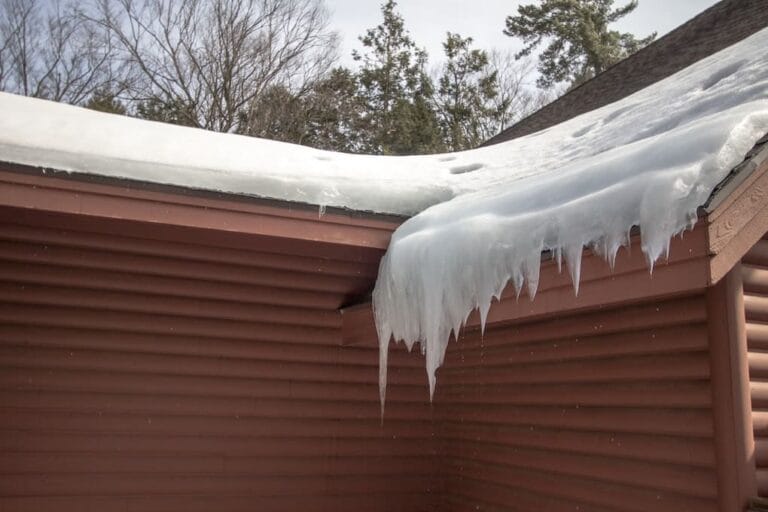
Icicles on their own are not always a problem. Icicles combined with a thick band of ice at the roof edge, water stains on ceilings near exterior walls, or wet insulation in the attic usually point to an ice dam.
Signs You Have an Ice Dam
- A thick ridge of ice along the gutters or roof edge
- Large icicles hanging from the gutters or eaves
- Water stains or peeling paint on ceilings or walls near exterior walls
- Damp or frosted insulation and decking in the attic, close to the eaves
- Gutters pulling away from the fascia under the weight of ice
How to Remove an Ice Dam Safely
The goal is not to remove every bit of ice. It is to stop the snow above the dam from feeding it and to give trapped water a path off the roof.
1. Rake Snow Off the Lower Roof
Use a roof rake with a long extension handle and stand on the ground. Pull snow off the lower 3 to 4 feet of the roof, working from the edge up. Leave a thin layer of snow on the shingles so the rake does not scrape off granules. Stay clear of power lines and watch for snow sliding off above you.
2. Melt Channels With Calcium Chloride
Fill a nylon stocking or pantyhose leg with calcium chloride ice melt and tie it off. Lay it across the ice dam so it runs from the roof down over the gutter. As it melts through, it opens a channel for water to drain. Use several stockings spaced a few feet apart on a long dam.
Use calcium chloride only. Rock salt (sodium chloride) can damage shingles, corrode metal gutters and flashing, and kill plants below. Check the product label before you buy.
3. Deal With Water Inside
If water is coming through a ceiling, catch it with buckets, move belongings out of the way, and photograph the stains. In the attic, you can lay plastic sheeting under drips to keep water off the insulation. Our guide on how to fix a roof leak covers interior steps in more detail.
4. Call for Help With Steep or Large Dams
If the dam is on a second-story roof, the gutters are pulling loose, or water keeps coming inside, call a professional. Roofers and ice dam removal services use low-pressure steam, which melts ice without cutting into the shingles.
What Not to Do
| Method | Why to avoid it |
|---|---|
| Chipping with a hammer, ice pick, or shovel | Cracks shingles, punctures underlayment, and dents gutters |
| Rock salt on the roof | Damages shingles and metal, and kills plants below |
| Heat guns, torches, or open flame | Fire risk, and can scorch or melt roofing |
| Pressure washers or hot-water hoses | Forces water under shingles and refreezes in gutters |
| Climbing onto an icy roof | Ice on shingles offers no traction |
How to Prevent Ice Dams
Ice dams form because the upper roof is warmer than the eaves. Keep the whole roof deck cold and snow melts evenly, or not at all, and there is no refreeze at the edge.
Seal Air Leaks Into the Attic
Warm air escapes into the attic through gaps around recessed lights, plumbing and wiring holes, bath fan housings, the attic hatch, and chimney chases. Sealing these gaps with foam, caulk, or weatherstripping is often the most effective single step.
Add Attic Insulation
Insulation on the attic floor keeps living-space heat out of the attic. If you can see the tops of the ceiling joists, there is likely not enough. The U.S. Department of Energy publishes recommended insulation levels by climate zone.
Ventilate the Attic
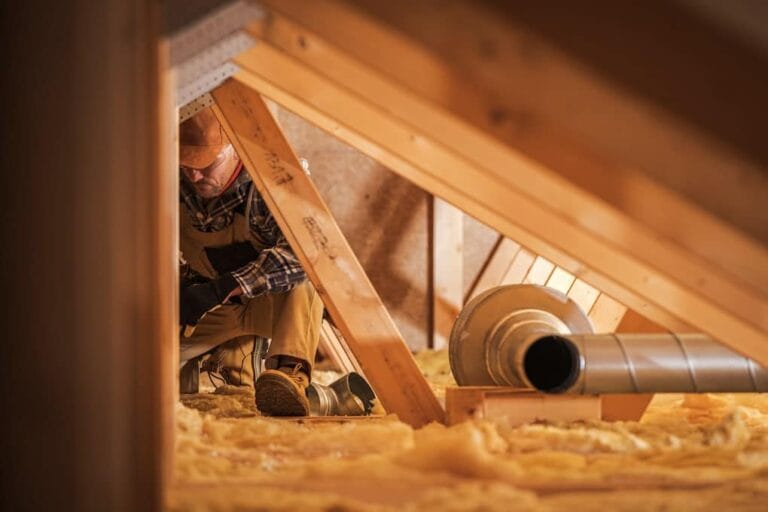
Balanced intake vents at the soffits and exhaust vents at or near the ridge pull cold outside air under the roof deck, keeping it close to outdoor temperature. Blocked soffit vents are a common cause of ice dams. Apple Roofing inspects and installs roof ventilation systems.
Keep Gutters Clear
Clogged gutters do not cause ice dams by themselves, but they give ice a place to build and can tear loose under the weight. Clean them before the first freeze. See our gutter services.
Install Ice and Water Shield When You Re-Roof
Self-adhering ice and water barrier along the eaves keeps backed-up water out of the decking if a dam does form. Building codes in many cold-climate areas require it on new roofs. Ask about it if your roof is due for replacement.
Frequently Asked Questions
What is the fastest way to get rid of an ice dam?
Rake snow off the lower roof from the ground, then lay nylon stockings filled with calcium chloride across the dam to melt drainage channels. For large dams or second-story roofs, a professional using low-pressure steam is the fastest safe option.
Can I use salt to melt an ice dam?
Use calcium chloride, not rock salt. Rock salt (sodium chloride) can damage shingles, corrode gutters and flashing, and harm plants and grass below the roof edge.
Should I knock icicles off my roof?
Knock off small icicles only if you can reach them safely from the ground without hitting the gutters or shingles. Never stand under large icicles, and do not chip at the ice dam behind them.
What causes ice dams on a roof?
Heat escaping from the house warms the upper roof deck. Snow melts there, runs down to the colder eaves, and refreezes into a ridge of ice that traps more water behind it.
How do I stop ice dams from coming back?
Seal air leaks into the attic, add attic insulation, and make sure soffit and ridge vents are open and balanced. Together these keep the roof deck cold so snow does not melt and refreeze at the edge.
Get Your Roof Ready Before the Next Storm
If ice dams form on your roof every winter, the cause is usually in the attic, and it can be found. Apple Roofing can inspect the roof, the attic ventilation, and the eaves, then tell you what we see. Our free 8-point roof inspection checks the shingles, valleys, ridge cap, chimney, ventilation, drip edge, flashing, and roof penetrations. We photograph what we find, explain it, and give you a written report, with no pressure to commit. That is what we mean by A Sweeter Roofing Experience.
Apple Roofing is a GAF-certified installer, residential work is backed by our 7-year workmanship warranty, and we take emergency calls 24 hours a day. Schedule a free roof inspection or call (866) 277-5388.