
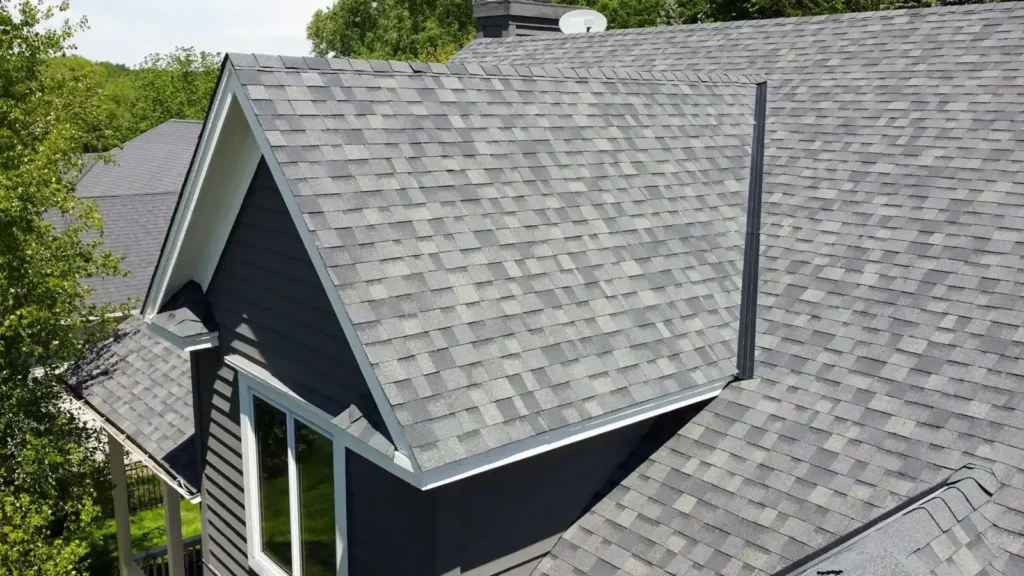
A roof replacement removes the old roofing down to the deck, repairs any damaged decking, and installs new underlayment, flashing, ventilation, and shingles or other roofing. On most homes the work on site takes one to a few days, and Fixr notes that larger or more complex roofs can take up to a week. The full process starts earlier, with an inspection, an estimate, material selection, and a permit.
Quick Answer: Roof Replacement Steps
- Inspection and written estimate
- Choosing materials and colors
- Permit and scheduling
- Preparing your home and yard
- Tear-off of the old roof
- Decking inspection and repair
- Drip edge, ice and water shield, and underlayment
- Shingles, flashing, and ventilation
- Cleanup and final inspection
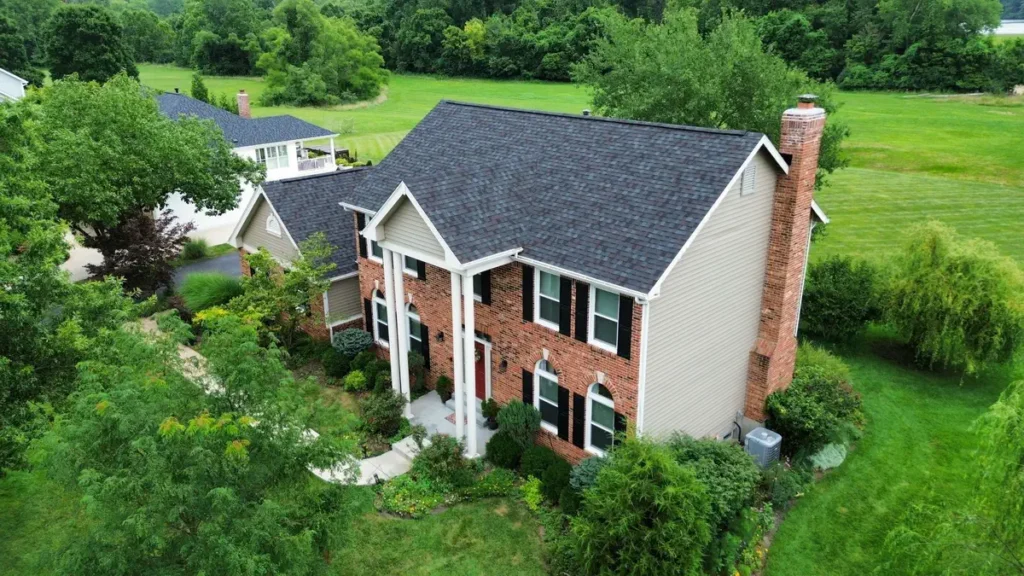
What Is Included in a Roof Replacement?
A full roof replacement, sometimes called a tear-off, usually includes:
- Removing all existing shingles, underlayment, and worn flashing
- Inspecting the roof deck and replacing damaged sections
- Installing drip edge along the eaves and rakes
- Installing ice and water shield in leak-prone areas such as eaves and valleys
- Installing synthetic or felt underlayment across the deck
- Installing starter strips, shingles, and ridge caps
- Installing new flashing at chimneys, walls, skylights, and vents
- Replacing pipe boots and installing or updating roof vents
- Hauling away debris and cleaning up the property
Ask any contractor to list each of these on the written estimate. If an item is missing, ask whether it is included.
Before the Work Starts
1. Inspection and Estimate
A roofer inspects the roof surface, flashing, ventilation, and attic, then measures the roof. Apple Roofing starts every replacement with an inspection and gives you a clear, written price before any work begins. Our free 8-point inspection covers the shingles, valleys, ridge cap, chimney, ventilation, drip edge, flashing, and roof penetrations, with photos of what we find.
2. Choose Materials
Pick the roofing material, shingle line, and color. Your roofer should explain how each option fits your climate, budget, and home. See our guides on asphalt vs. metal vs. tile vs. slate and choosing shingle colors. For costs, see our roof replacement cost guide.
3. Permit and Scheduling
Most cities require a permit for a roof replacement. Your contractor typically pulls it and schedules the work around the weather. Shingles need dry conditions, and sealants need temperatures above freezing to bond.
4. Prepare Your Home
A little preparation makes install day easier:
- Move cars out of the driveway and garage so the crew can park a dumpster or trailer.
- Take down wall hangings and fragile items on top-floor walls. Hammering can shake them loose.
- Cover belongings stored in the attic with sheets or tarps to catch dust and debris.
- Mow the lawn a day or two before so dropped nails are easier to find.
- Move patio furniture, grills, and potted plants away from the house.
- Plan for pets and children. Tear-off is loud, and the work area around the house should stay clear.
- Tell your neighbors, especially if the crew will park near their property.
Install Day: The Step-by-Step Process
Step 1: Protect the Property
The crew covers landscaping, siding, windows, and walkways near the house with tarps and sets up a dumpster or trailer for debris.
Step 2: Tear Off the Old Roof
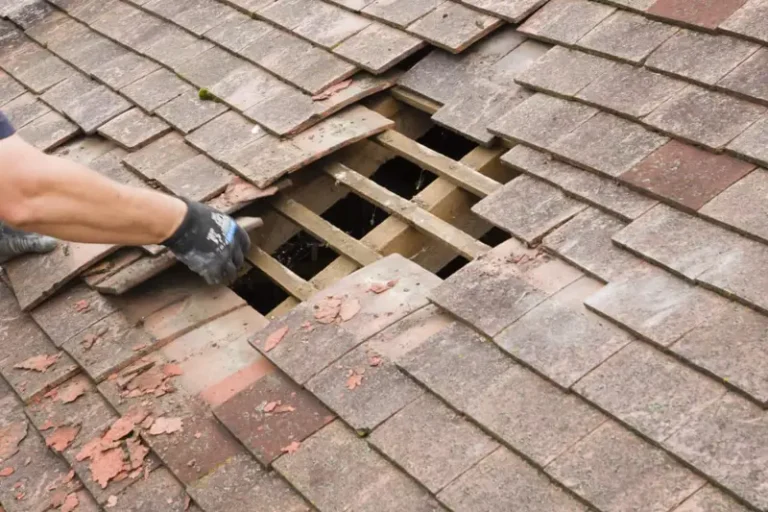
Old shingles, underlayment, and worn flashing come off down to the roof deck. Removing everything lets the crew see the deck and install the new system correctly. In some areas a second layer can be installed over the first, but many codes limit this and it hides deck problems.
Step 3: Inspect and Repair the Decking
With the deck exposed, the crew checks for rot, soft spots, and delamination. Damaged sheets are replaced before any new material goes down. Decking problems are often invisible until tear-off, which is why estimates usually list a price per sheet for replacement.
Step 4: Install Drip Edge and Ice and Water Shield
Metal drip edge goes along the eaves and rakes to direct water into the gutters and protect the deck edge. Self-adhering ice and water shield is applied along the eaves, in valleys, and around penetrations. Building codes in many cold-climate areas require it along the eaves.
Step 5: Install Underlayment
Synthetic or felt underlayment covers the rest of the deck, overlapping from the bottom up so water runs over each seam, not into it.
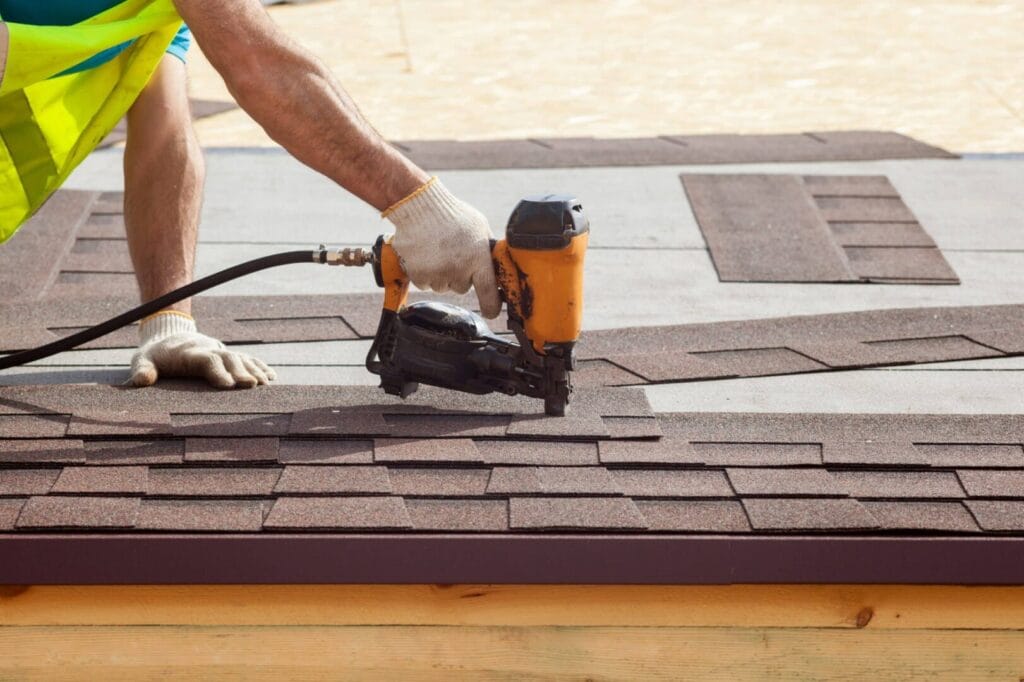
Step 6: Install Shingles
A starter strip goes along the eaves, then shingles are installed in courses from the bottom of the roof up, nailed to the manufacturer’s specifications. Ridge cap shingles finish the peaks and hips.
Step 7: Install Flashing and Pipe Boots
New step and counter flashing goes in at chimneys, walls, dormers, and skylights, and new boots seal the plumbing vent pipes. Flashing is where many roof leaks start, so this step matters.
Step 8: Ventilation
Intake and exhaust vents, such as soffit vents and ridge vents, are installed or updated so the attic stays dry and close to outdoor temperature. Learn more about roof ventilation.
Step 9: Cleanup and Final Inspection
The crew removes debris, sweeps the yard and driveway for nails, and hauls away the old roofing. Apple Roofing finishes each job with a final cleanup and inspection.
How Long Does a Roof Replacement Take?
Most residential roof replacements take one to a few days on site. Fixr puts the range at one to seven days depending on the roof’s size, pitch, complexity, and material. Weather delays and decking repairs can add time. Tile and slate take longer than asphalt shingles.
After the New Roof Is Installed
- Walk the property and look for any nails or debris the crew missed.
- Keep your written warranty documents and the final invoice together.
- Note the installation date for future maintenance and resale.
- Schedule periodic inspections, especially after major storms.
Residential replacements by Apple Roofing are backed by our 7-year workmanship warranty.
Signs It Is Time to Replace Your Roof
- The roof is near or past the expected lifespan for its material
- Leaks keep returning in different spots
- Shingles are curling, cracking, or missing across several areas
- Heavy granule loss in the gutters
- Soft or sagging areas in the roof deck
See signs of roof damage, how often to replace your roof, and when to repair or replace.
Frequently Asked Questions
How long does it take to replace a roof?
Most residential roof replacements take one to a few days on site. Larger, steeper, or more complex roofs, and tile or slate roofs, can take up to a week.
What is included in a roof replacement?
Tear-off of the old roofing, decking inspection and repair, drip edge, ice and water shield, underlayment, starter strips, shingles, ridge caps, new flashing and pipe boots, ventilation, and cleanup.
Can I stay home during a roof replacement?
Yes, most homeowners stay home. Expect loud noise during tear-off and installation, keep pets and children away from the work area, and move cars out of the driveway.
What happens if the roofer finds rotted decking?
Damaged decking is replaced before the new roof goes on. Most estimates list a price per sheet for decking replacement because the extent of the damage is only visible after tear-off.
Can a new roof be installed over the old one?
Some codes allow a second layer of shingles over the first, but many limit it. A full tear-off lets the crew inspect and repair the deck and install the new roof to manufacturer specifications.
Plan Your Roof Replacement
If you are planning a new roof, Apple Roofing can inspect your current roof and walk you through the process and the price. Our free 8-point roof inspection checks the shingles, valleys, ridge cap, chimney, ventilation, drip edge, flashing, and roof penetrations. We photograph what we find, explain it, and give you a written report, with no pressure to commit. That is what we mean by A Sweeter Roofing Experience.
Apple Roofing is a GAF-certified installer, residential work is backed by our 7-year workmanship warranty, and we take emergency calls 24 hours a day. Schedule a free roof inspection or call (866) 277-5388.